
Conversations on Planes
Q&A with Dr. Pavani K. Ram

When you work in global development, 18-hour flights become an art form in small talk. In this segment, we ask global development professionals the fun and the serious — the moments that stayed with them and their take on the realities of the sector today. In this edition, we hear from USAID’s former Chief Medical Officer for Global Health, an academic and former Epidemic Intelligence Service Officer (EIS), who has spent years dedicated to eradicating the tragedy of preventable child mortality across the globe for decades.
Meet Dr. Pavani K. Ram
Tell us who you are.
Physician, public servant, and do-gooder who has tried to live with the purpose to serve for as long as I can remember. The mantra that drives me these days: there are many good ways to do good in the world.
The Moments
The experiences that stayed with them.
What was an activity that you participated in for work that made you think, “I can’t believe this is actually part of my job”?
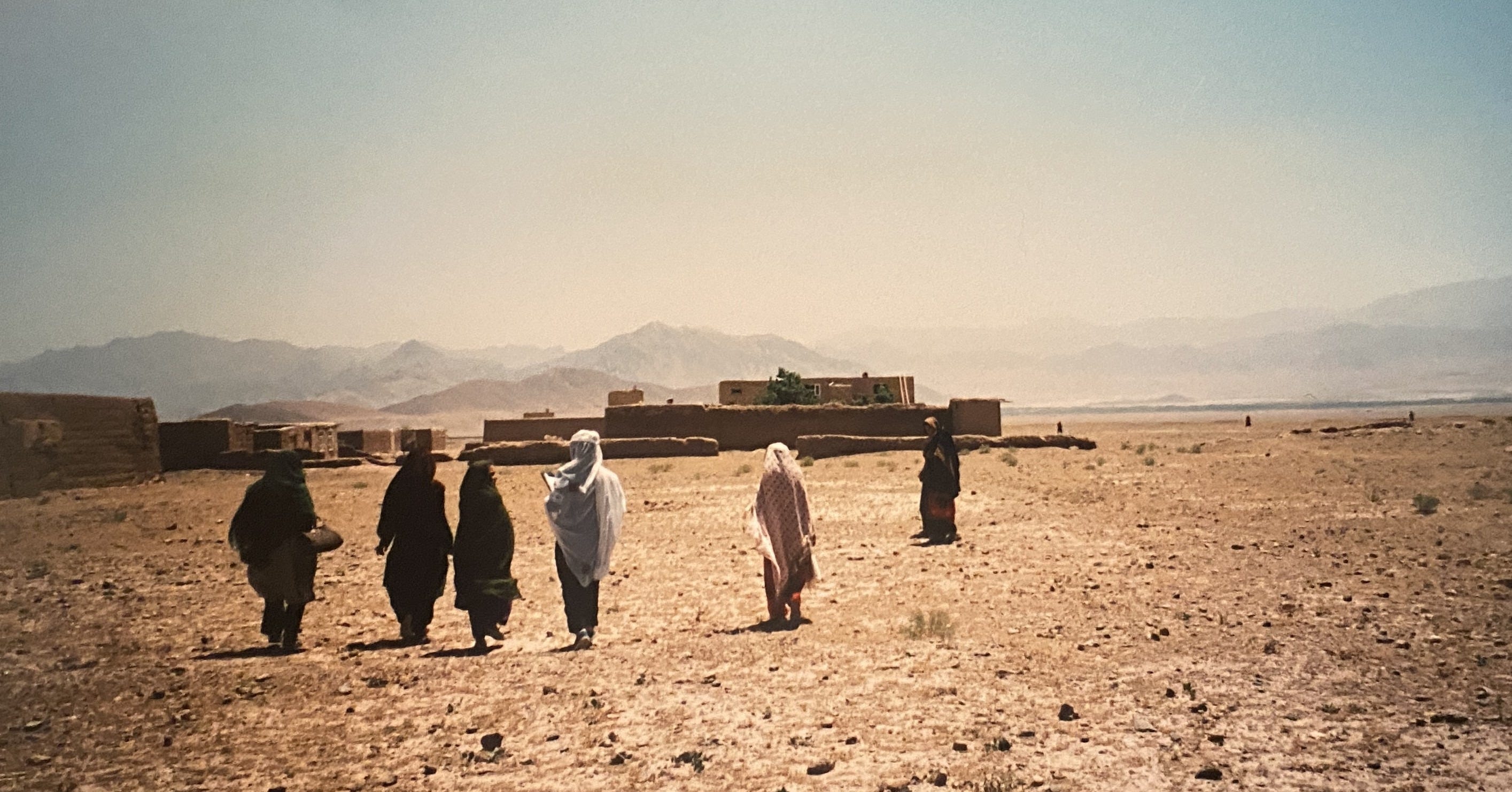
There have been so many such activities and moments that it is hard to choose just one. I have had the privilege (and bear the enormous environmental responsibility) of having traveled to innumerable countries over the course of the past 25 years. Within me lives an anthropologist who loves cultures, a linguist who loves languages, a diplomat who seeks to understand and negotiate shared understanding. All of these identities have seen their light in my work, learning about health behaviors around the world, muddling my way through French in meetings with senior health officials in West Africa, and negotiating agreements in multilateral spaces on behalf of the US. To exercise all these parts of me, and to do so as an expression of patriotism through my service at USAID and the CDC - I still can’t believe that this privilege has been at the heart of my professional life.
What’s the one food you ate during your travels that you now genuinely crave and the one you’d be happy never to eat again?
A drink I have had on repeat in most of my visits to Bangladesh and India: fresh lime sodas – sweet, salty, tangy, utterly refreshing. On these hot summer days, I’d love to have a fresh lime soda, South Asian style!
I served for a few weeks in Banda Aceh, Indonesia after the 2004 tsunami. Tempeh was the main protein source available for vegetarians there throughout my time. But, as my son so politely says, “it was not to my taste”. To this day, I avoid tempeh at all costs. Looking back, I value how much ensuring nourishing food in the scale of that complex humanitarian emergency was an incredible feat, and I am so grateful to all the workers who made that possible so that the response architecture could function. I acknowledge I have the luxury of giving up tempeh for life as well as, far more importantly, the deep privilege with which I lived then and live now.
Was there a specific moment — a conversation, a place, a project — when you knew global development was your path?
Thirty years ago, as a medical student, I had the fortune of doing a community medicine rotation at Christian Medical College (CMC), a much renowned academic medical center, in Vellore, Tamil Nadu, India. The program offered me unmatched training beyond what I had already learned at my own medical school in the US, including the opportunity to see patients in a community health center and during home visits.
One patient in particular has stayed with me for these 30 years, a young pregnant woman expecting her first baby who arrived at the labor and delivery unit with her mother. She had not felt the baby move in a couple of days. She was already at 42 weeks of pregnancy. Stillbirth. When the care team informed her, she appeared stoic, more than likely in a state of shock. The father, who had stood outside L&D, wept and the grandmother sobbed loudly. The mother sat in her bed alone and stone-faced.
Even now, there are nearly 2 million stillbirths each year. Additionally, there are still nearly 5 million deaths among children under 5 each year. Millions of families can be spared the tragic loss and devastation of stillbirth and preventable child mortality by more fully meeting family planning demand, treating maternal infections, and managing other conditions through evidence-based maternal, newborn, and child health interventions.
I have spent the better part of the last 25 years thinking about how to scale up these interventions, in service of all the mothers who should never have to experience such grief.
The Realities
Their take on what’s working, what’s not, and what needs to change.
What frustrated you most about how the global development system worked? And what would you have changed?
Even amongst all the conversations we have had for a decade or more about locally-led development, too much of the agenda is still set in posh rooms in Davos, Geneva, and Washington, DC. The Lusaka Agenda and the Accra Reset, for example, are part of shifting that agenda, but realizing the balancing effects of similar such efforts is a long time coming.
What worries you most about where global development is headed? What feels different this time?
So much has been said about the dismantling of USAID and the chaotic nature of US engagement in global health and development. But the US has not been the lone sovereign donor to retreat from its stated commitments to global health and development.
I am worried about the trust that has broken: between the US and partner governments, between the US and other donors, in the multilateral space, and with public servants, many of whom have dedicated large portions of their lives to serve patriotically on behalf of the US.
What gives you hope for the future of global development? What would need to change for that hope to be justified?
I’ve had the privilege of being at a couple of global convenings over the past few months. The world is still turning; the conversations are happening, often as robustly as before, even if some have recused themselves from those conversations.
I am also heartened by the work of leaders such as those that I profile in a series on resilient leadership. I would invite this community to read all the profiles. These leaders are and have navigated crises ranging from organizational change to the global COVID-19 pandemic to the current funding crisis affecting global health. They exemplify care in action for the mission and for people around the world, as well as for their nearest stakeholders. These leaders and others like them, especially the ones from implementing countries, are surely part of building the future ahead.
The outpouring of cohesion and support in the global health and development community since January 2025 has been profound. The community has coalesced to lift each other up during some of the toughest times. Many have gone on to do good in the world in a variety of ways outside of global health and development. Others have harnessed their capacities to provide the best analysis and advocacy possible to advocate for effective foreign assistance.
Acceptance is a profoundly effective resilience strategy. We must move forward as a community, with the resolve that the future will not look like the past. Eighteen months on from the USAID stop work orders and all that has ensued, we would do well to vigorously pursue Dr. Samukeliso Dube’s guidance that “In this current funding crisis, we could keep writing about the shrinking of overseas development assistance, but it is not coming back. We would do better to ask ourselves - what else do we need to do? We need new money, new ways of funding, new funders, new ways of thinking.”
⚡ Speed Round
Three things that must change for global development to work well in the future.
Renewed trust building. This will take time, a long time, but is surely integral to a productive path forward. It will require humility, which feels in short supply at present.
Everybody in the pool. It’ll take countries, civil society, sovereign and philanthropic donors, effective altruists, and all the thinkers with the good ideas. We cannot sink back into a situation in which any one actor holds such outsized influence or power.
Pragmatic optimism. We must look at what is in our control, harness what is in our control, and look forward with the conviction espoused by Margaret Mead: “Never doubt that a small group of thoughtful, committed, citizens can change the world. Indeed, it is the only thing that ever has.”
One buzzword you never want to hear again?
“Localization”
It defines the actions undertaken by those in power. I prefer “locally-led development”, which clarifies the principle of where power ought to lie.
About the Author
Pavani K. Ram, MD, is a physician, global health leader, and certified executive coach with more than 25 years of experience spanning academia, U.S. government service, and global health. She has led the child health and immunization portfolio at USAID, held a tenured faculty position at the University at Buffalo, and published more than 100 peer-reviewed papers. Certified in Marshall Goldsmith Stakeholder-Centered Coaching, Dr. Ram partners with physicians, academics, global health practitioners and other purpose-driven leaders to strengthen leadership effectiveness, build resilience, and develop sustainable productivity. Learn more at drpavaniram.com.
Wonderful convo, Pavani and Amen to: “Everybody in the pool!” 💪❤️