
Inclusion, by design
Ashley Gibbs reflects on designing PEPFAR's Gender and Sexual Diversity Training, which brought LGBTQ+ voices into US Embassies worldwide.


In 2015, I was serving as a gender advisor on the Health Policy Project, helping US Government staff and partners understand how harmful gender norms and stigmas, such as sexism, homophobia, and transphobia, negatively affect HIV programs and health outcomes. With a multiagency team, we developed the PEPFAR Gender and Sexual Diversity Training and implemented it across the globe. In one year, my project teammates and I traveled to 38 countries, the majority of which had laws penalizing consensual same-sex sexual acts–effectively criminalizing homosexuality. A legacy of colonial-era laws, similar legislation existed in 76 countries around the world at that time.
For me, it was a year of long days and long flights, living out of a suitcase and enduring endless jet lag. It was also an incredibly fulfilling period, because I worked with some of the most talented and committed professionals I have ever had the honor of working with. (I hope some of you are reading this and know how much our collaboration meant to me.)
What was life-changing about it was that I was fortunate enough to meet LGBTQ+ individuals across the world–many living in incredibly hostile environments–who agreed to share their personal stories to create positive change. The conversations I had with these people taught me a lot about how the experiences of LGBTQ+ people are similar across continents, as well as the ways in which the environments in which we live shape our ability to live and thrive. Making brief yet deep connections enriched my life and helped me understand that we are all part of the same global community.
Personal stories, policy spaces
The Gender and Sexual Diversity Training came about because evidence shows that men who have sex with men and transgender women are more likely to be living with HIV and less likely to have access to services because of criminalization and stigma. Some of the same barriers affect adolescent girls and young women–namely, harmful gender norms that influence individual behaviors, social structures, health programming, and policies at all levels. My team worked with US Embassy staff, both Americans and host country nationals, to help them understand how gender norms influence our lives, demystify LGBTQ+ identities, discuss how stigma affects health, and plan how to improve PEPFAR programs through these lenses.
We had expertise in all of these areas and stayed abreast of the newest scientific evidence and policy developments. But there is only so much a group of American subject matter experts can do to convince people in other cultures to change long-held beliefs about LGBTQ+ people. So we engaged local co-facilitators from the region. We also organized panel discussions with individuals from local communities, to share what it was like to live as an LGBTQ+ person in their country.
US Embassies can be intimidating: fortress-like walls, seemingly endless security check points, ubiquitous Marine guards, opaque diplomatic protocols, people in suits rushing around.
So, imagine a gay man, a trans woman, a nonbinary person–someone whose existence is not recognized by their government.
Maybe they are in a traditional marriage, or maybe their family or church has rejected them.
Maybe they have a stable job or maybe they can’t get work because of who they are.
Maybe they have HIV and take their medications daily, or maybe they have been shamed and yelled at by a nurse so they stopped going to the clinic and picking up their medications.
Maybe they have a place to stay with other queer people as a chosen family, or maybe their landlord has kicked them out for being gay.
Imagine them going through life in a society that does not accept them.
Now imagine their decision to make a difference in that society by walking into that Embassy fortress to sit in front of a conference room full of suited Embassy staff — Americans and host country colleagues alike —and share their personal story, to break down assumptions others hold about them, and to educate PEPFAR staff on what the local community needs from programming.
The human connection
Many of those panelists bared their souls in those rooms. They shared stories of rejection, physical violence, evictions, and unemployment. They also shared stories of love, family, and happiness. The testimonies were deeply personal and deeply moving. I preferred to stand in the back of the room, to be out of view so that I could quickly brush away the tears that would spring into my eyes during particularly painful moments.
We had standard questions for panelists about their experiences with stigma and health services, and their recommendations to PEPFAR staff on how to improve programming. But the majority of the time was dedicated to audience Q&A. For many Embassy audience members, it was the first time that they spoke directly with an open member of the LGBTQ+ community. For many, it was an eye opener to meet a gay person, or a trans person, and to realize how we are all human and how we all want the same things. People asked personal questions about family and religion–those were the topics where I noticed the most surprised reactions from the audience. People were surprised that a gay person was so proud of being a parent, or was a devout Christian. They were surprised because the misinformation they’d heard their entire lives was being refuted by an actual person, right in front of them.
As with any good development initiative, our team evaluated the program, using pre- and post-training surveys as well as a 3-6 month follow up survey and key informant interviews. We were thrilled that the evidence clearly demonstrated that people had changed their beliefs and attitudes towards LGBTQ+ people as a result of a one-day training. What the research did not capture adequately is that it was the panelist stories and those direct conversations that made the most difference. It was the human connection.
In Botswana, in Cambodia, in Guyana, the LGBTQ+ people I met were from different cultures but they were always the same. They wanted safety, friendship, love, and freedom from fear. They wanted education, housing, stable jobs, and access to the services they needed simply to survive. Our audiences heard that and it resonated with them on a personal level.
From safe spaces to erased spaces
In 2014, the Obama administration expanded federal nondiscrimination policy to include gender identity. In 2015, the Supreme Court ruled on Obergefell vs Hodges, legalizing same-sex marriage across the country. In 2016, Embassies around the world flew rainbow flags for June Pride month. To me, it felt like we were on an unstoppable forward trajectory to improve the lives of LGBTQ+ people around the world. For the host country nationals we invited for the panels, I sensed that the US Embassy became more of a safe space where they could expect greater acceptance and support than they may have in their day-to-day lives.
A decade later, LGBTQ+ rights are backsliding in the United States, and the US Government has abandoned human rights on the global stage. Across the federal government, LGBTQ+ employees are experiencing a new Lavender Scare, a callback to McCarthy-era purges, playing out through targeted harassment, doxxing, and firings. The day after President Trump took office in 2025, through executive orders he rescinded nondiscrimination protections for LGBTQ+ Americans and declared that the United States only recognizes two sexes as assigned at birth, erasing intersex and transgender people and setting the stage for widespread governmental discrimination and attacks on health and rights. The US Department of Justice has subpoenaed healthcare entities that provide gender-affirming care to youth, demanding sensitive, confidential information about minors. This has led multiple clinics across the country to end such services for young people.
The similarities cross geographies as autocrats pull from tested playbooks. During our training in Ethiopia in 2015, a US Embassy staff member told me that there are no gay people in the country according to their data. Obviously this was not true, and this belief was not isolated to one country. Despite global best practice, many countries refuse to collect HIV data on gay and bisexual men or transgender women, populations with the highest risk of acquiring HIV. The thinking is: If we don’t count them, they don’t exist. (The quiet part: If we don’t give them care, they will die.) Similarly, since January 2025 the US government has been systematically scrubbing LGBTQ+ Americans from government data.
When a country doesn’t have data on a population, it doesn’t design programs for them, so they don’t receive the care they need. It’s that simple. This is exclusion by design. Among the US government global health programs that remain, we see the same erasure of populations and denial of evidence-based interventions. PEPFAR programs were often the largest or only source of funding for health programs focused on key populations, vulnerable groups of people with exceptionally high HIV prevalence: men who have sex with men, female sex workers, transgender people, and people who inject drugs. Now, key populations programs have been gutted and key populations are not included in the April 2026 PEPFAR data release. A recent study found that 73% of PEPFAR implementing partners have cut services for key populations.
Woke, radical, hopeful, and dedicated
In 2025, when my USAID colleagues and I lost our jobs, we were told that USAID’s work was “woke”. The President of the United States called us “radical lunatics” on national television. The new administration immediately cancelled and publicly derided any work that mentioned gender, sexuality, equality, or rights. My colleagues who focused on those issues were the first to be illegally fired.
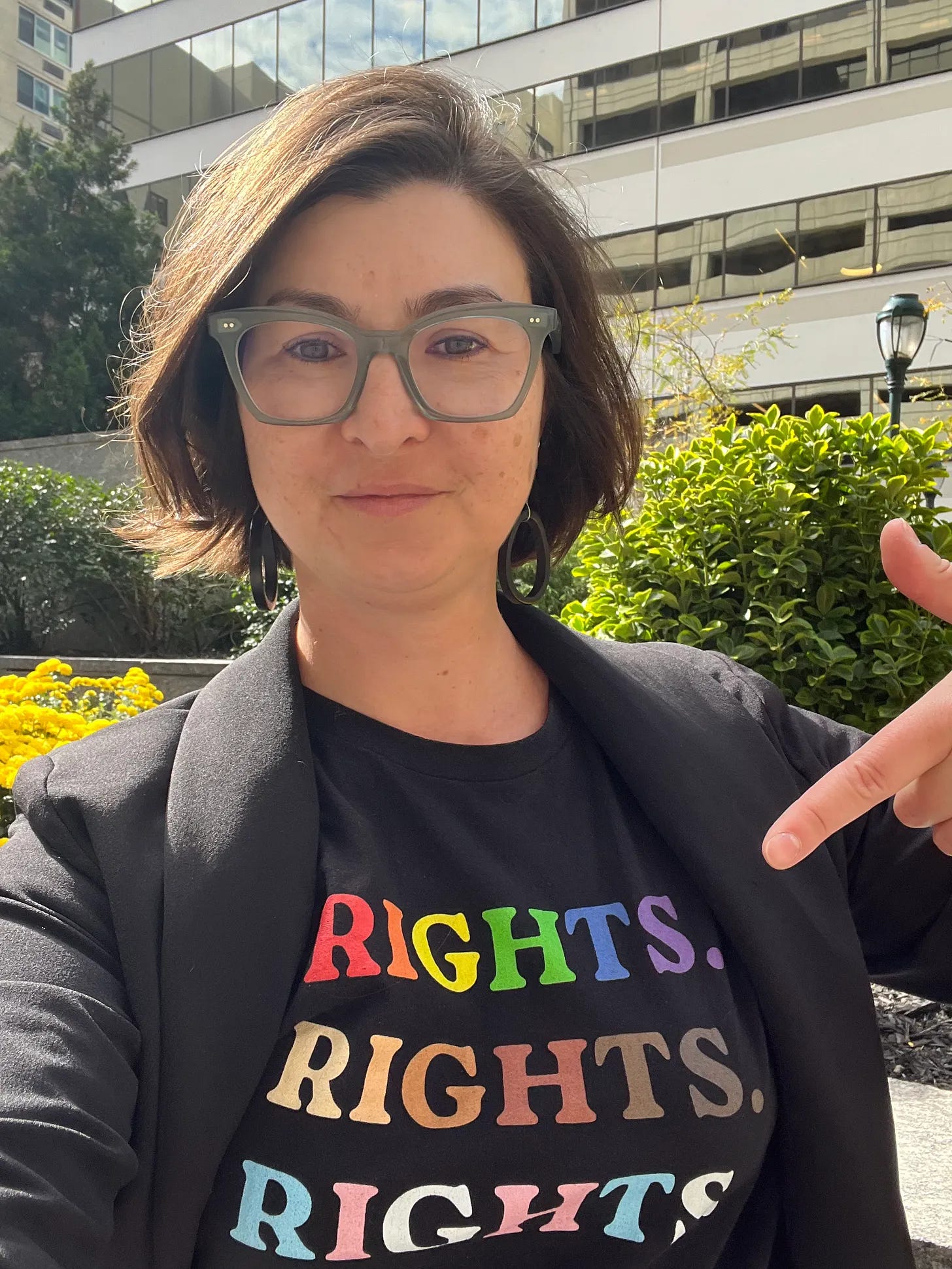
So I ask myself: Is it woke to believe that all people should have equal rights? Is it radical to believe that we can change the world by connecting on a human level? If so, I’m happy to be a woke, radical lunatic. Because despite the pain and anger I hold over what happened to USAID programs and the people they served in 2025, I also carry with me the stories of all the people I met around the world who cared enough to dedicate their time and energy to positive change. I channel their hope and their dedication to making this world better for everyone.
Ashley Gibbs is a queer woman who knows that her liberation is interconnected with the liberation of all people. With more than 15 years of experience in development and public health programming, she served in the USAID Bureau for Global Health working on HIV and global health security. Previously at Palladium, she designed and implemented USAID-funded health programs, with a focus on strengthening civil society, building sustainable health systems, and advancing gender equality. She has a Masters in International Affairs from The George Washington University. Currently, Ashley is a Board Co-Chair of the DC LGBTQ+ Community Center. Visit the website to learn more or donate to the Center's programs.
Excellent piece, Ashley! Fellow woke, radical lunatic here. I'm mapping the invisible USAID substrate underneath PEPFAR, the people, partners, and relationships that actually made the programs run. It was fifteen years of trust built by people like your co-facilitators and panelists, and that layer is the part nobody documented because it never needed documenting until now.
Would love any feedback: https://www.clearwater-global.com/help-shape-the-future
Ashley, thank you so much for sharing! This is such a great piece. I’m so proud of you and other past colleagues at Palladium for all of the very much needed work you did in this area.